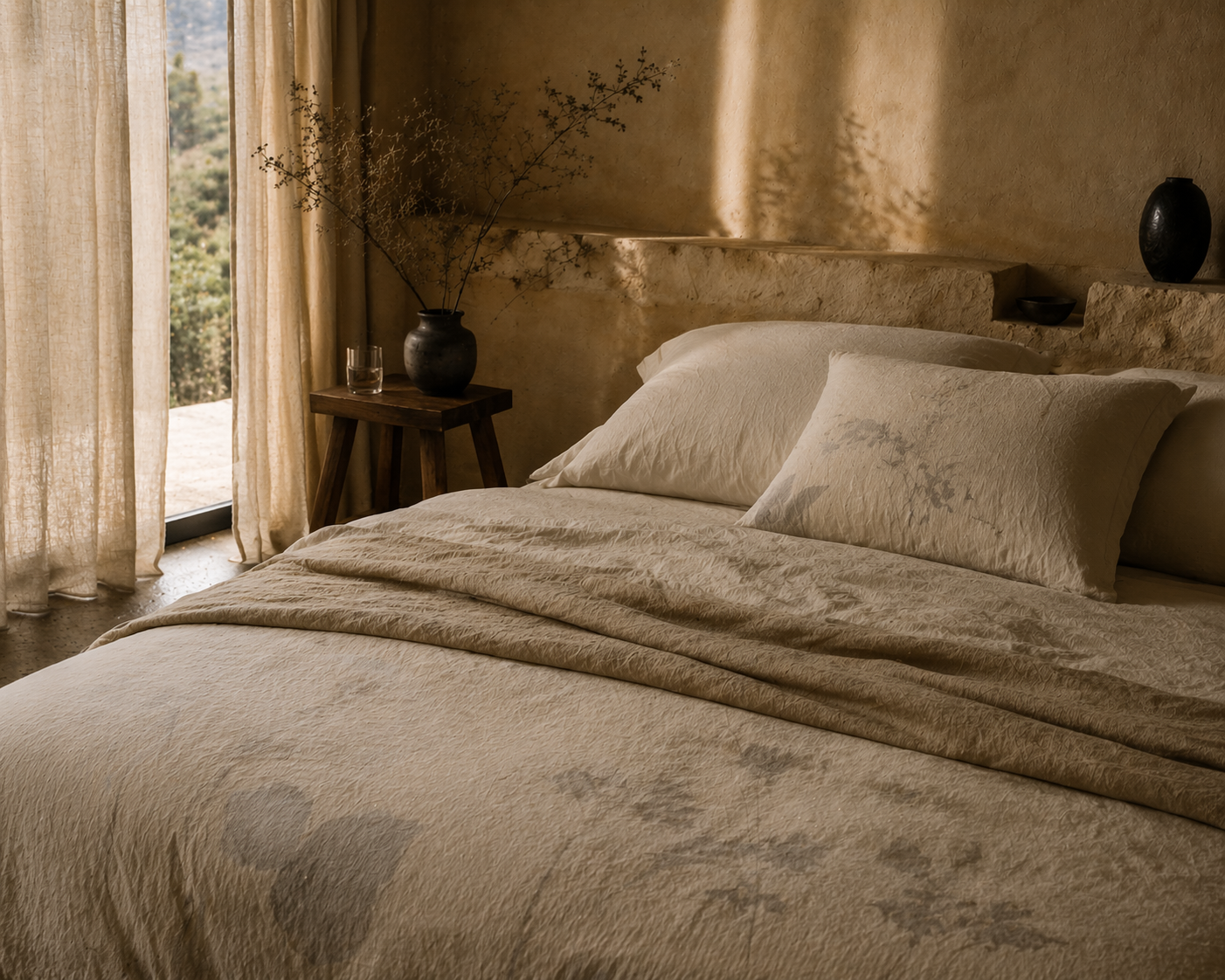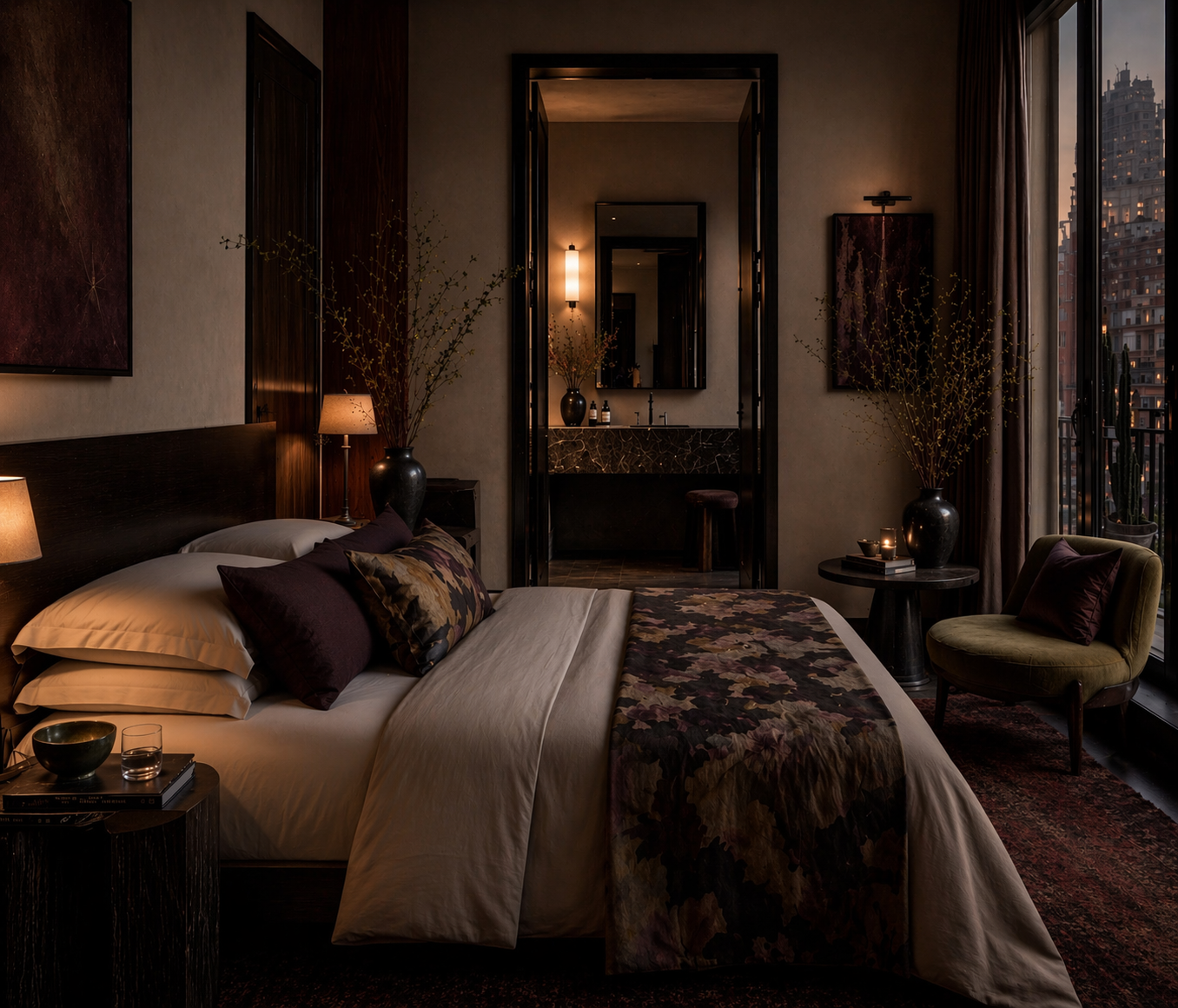
Urban Suite
Surface Direction for a Boutique Hotel Interior
A conceptual study of surface in an urban interior—focused on depth, contrast, and material tension across space and object.

Boutique urban interiors often rely on atmosphere and material contrast to differentiate.
Surface is frequently treated as an isolated layer rather than part of the spatial language.
This concept explores a surface direction designed to operate within shadow, density, and layered material conditions.

Approach

Tonal contrast
Deeper palettes and controlled highlights create tension without excess.
Structural influence
Patterns reference architectural rhythm rather than standalone motifs.
Atmospheric consistency
Surface maintains coherence across interior elements and personal-use objects.
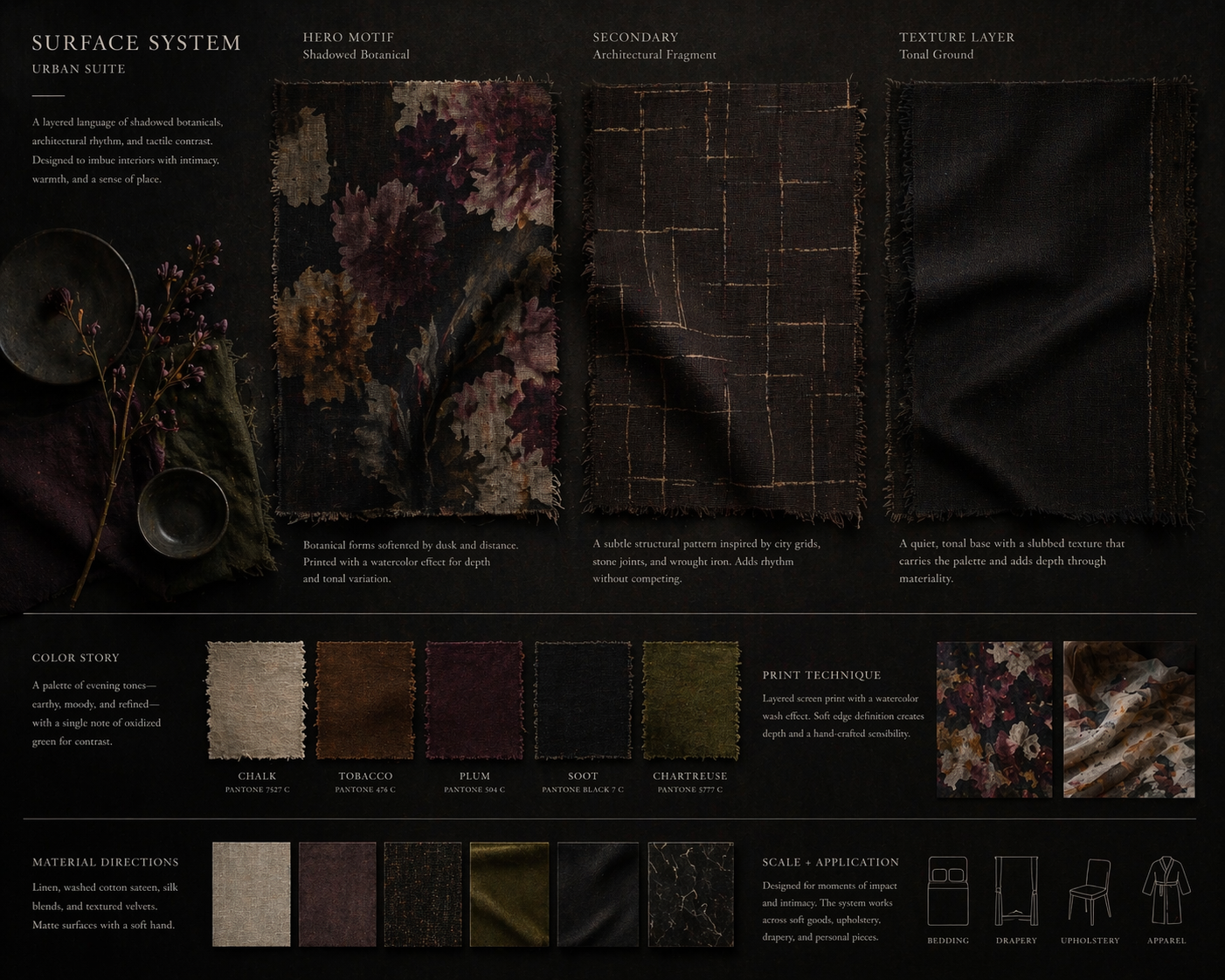
Integrating relationship between environment & product
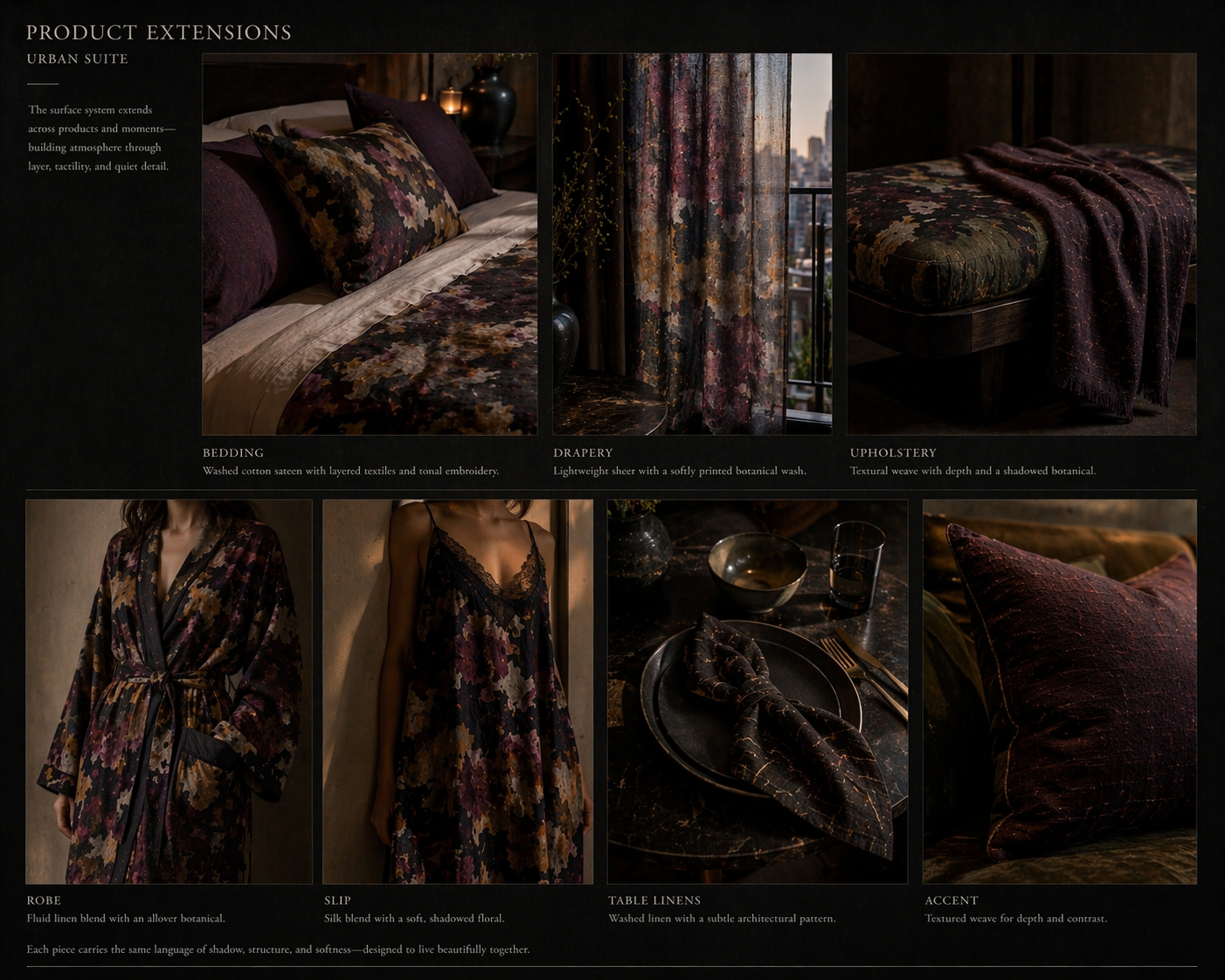
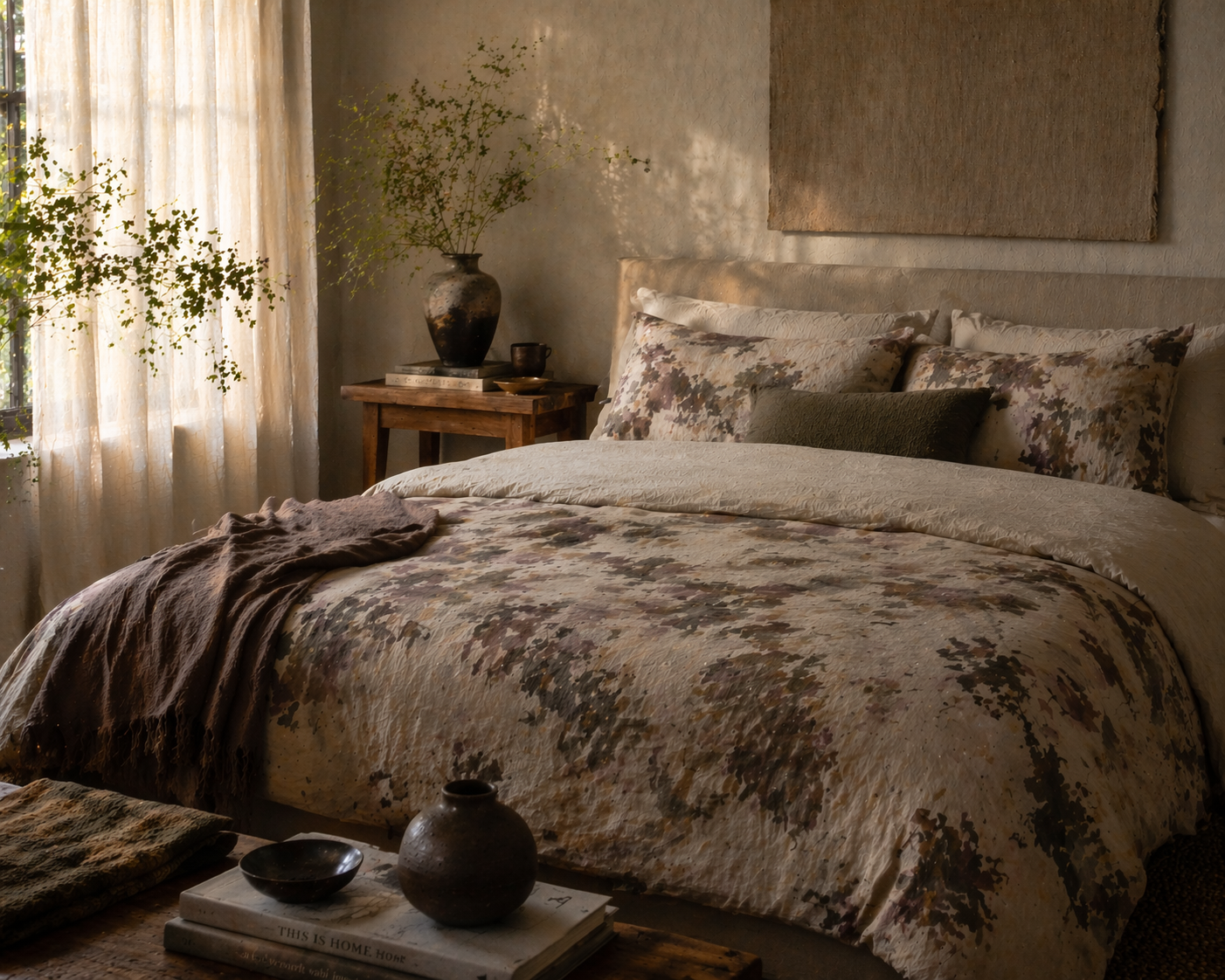
A layered system of shadowed botanicals, fragmented structure, and tonal grounding—designed to integrate into interior environments with depth and restraint.
Outcome
This direction supports:
Differentiated interior identity through atmosphere rather than overt styling
Cohesion across material categories within a single space
A more integrated relationship between environment and product
Reduced reliance on trend-driven surface
Collector’s Home